Latest Posts

Maladaptive Memories (Or, How Your Body Just Won’t Let Go)

Copy of ser-en-dip-it-y (n) (8)

Is your memory just too good?

I’m not talking about recalling what you ate for breakfast six Sundays ago or always knowing where you dropped your car keys. I’m referring to the body’s ability to remember everything that happened to it — for your entire life.

We hear terms like “muscle memory,” but most of us have no reason to contemplate what that means. Well, let me enlighten you. Muscles remember a strength training routine far easier the second time around; say you start training, have a few weeks of vacation, and then start again because your clothes don’t fit after the annual Holiday Food Gauntlet. It is far easier to get back on the saddle the second time, and it takes less time to reach the same goals.
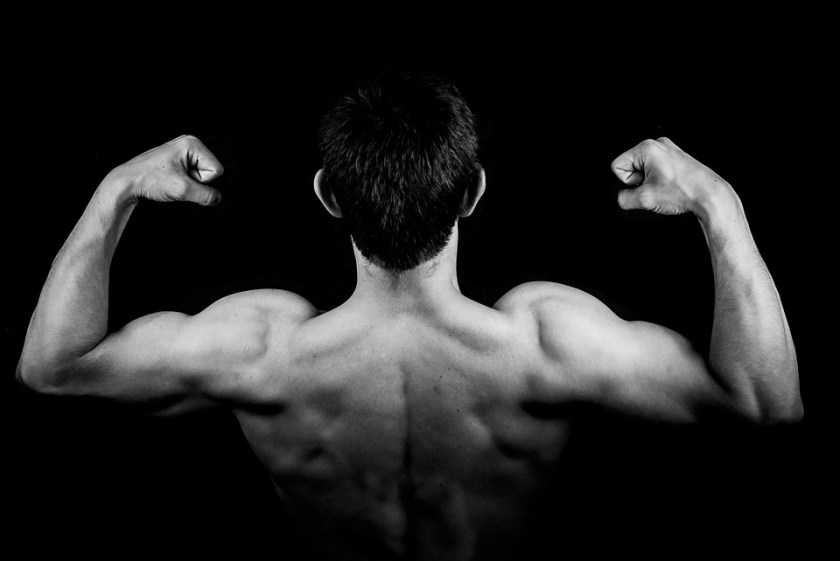
man-461195_960_720

He was 120 pounds a few weeks ago, but muscle memory worked in his favor! Find out how! Doctors HATE him!

This idea of the body remembering things has always stuck with me. Let’s say I took a tire iron to your knees on Thanksgiving, Nancy Kerrigan-style (stay with me). Once you get over the initial shock, pain, casts, surgery, rehab, soft casts, physical therapy, aqua therapy, and more — let’s say that now we’re about a year past the tire iron incident, and understandably you are wary at the next Thanksgiving dinner — it’s possible that your knees will remember that injury and keep reacting as if it’s acute.

happy-thanksgiving-1062208_960_720

“Oh, uh… hi, Tonya. How have things been? I’m doing just great. My knee? Oh, it’s fine, just fine, except for that time when you MURDERED IT, YOU WHORE.” — Nancy Kerrigan at the U.S. Olympic Team Thanksgiving Reunion.

In reality, we know so little about the human body. We know more than we did when people thought ice pick lobotomies were the greatest thing ever, and we know more than we did when we thought schizophrenics were actually witches. Really, though, we don’t understand pain.

Side note: I went to Ohio University for my undergraduate degree. Athens, Ohio is famous for its ghost stories, one of which discusses the Ridges — a haunted mental institution set on a hill above campus. Dr. Walter Freeman was one of the doctors on staff, and he would drive around performing ice pick lobotomies; he eventually dubbed his car the “loboto-mobile.”  He was even the one who performed the botched lobotomy on Rosemary Kennedy, which was a significant factor in JFK shutting down state mental institutions. The more you know!

My spine surgeon told me that even if you fix a structural abnormality, the nerves might nevertheless keep gliding across that same recognized pain path; for example, a bulging disc can be removed and the pinched nerve relieved, but the pain continues regardless. Basically, if your nerves learn to do things one way, they sure as hell don’t have a reason to do it another way.

This concept intrigues me. You can remove an obstacle, and the pain keeps coming anyway. It learned to do it, somehow, like a rerouted river. These “learned pain pathways” make sense when you visit a doctor and the two of you sit before your radiology report, stumped.

“Your pain doesn’t make sense with such a slight structural abnormality,” your doctor says.

“That’s great,” you reply. “I didn’t realize until just now that the human body is only made up of bones. Thanks!”

There is so much more to our bodies than our respective skeletons. There are muscles, tendons, connective tissue (or fascia), organs, etc. All of these are affected by an injury. Even if you remove part of the spinal column, the stuff remaining in the area (the blast radius, if you will… and you will) can stay angry.

This goes far beyond today’s treatment of intractable pain. Hell, if I’d been alive in 1970, there’s a good chance that doctors might have insisted on a cordotomy — cutting through the front half of the spinal cord, or if that wasn’t an option, then a frontal lobe lobotomization — to treat my chronic pain. What would that have done? Oh, I dunno, taken away 100 percent of my orgasms, to start. That’d be fun. That’d be just dandy. After a cordotomy, 1 out of 10 patients becomes paralyzed on one side of the body; loses bladder and/or bowel control; and/or develops a new, worse pain than what was there in the first place. That’s a 130 percent complication rate. Bravo, ladies and gentlemen! Bravo.

Patton Oswalt once said that even if a parent reads literally everything available in relation to child-rearing, 40 years from now he will learn that, despite his herculean efforts, he totally screwed up. I’m sure it’ll be the same for doctors. Hell, it is the same for doctors. Cordotomies probably sound so quaint now! Not as quaint as bloodletting, though, or wearing plague masks. Those totally worked.
plague-doctor-155830_960_720

Science!

My point is that even if a bone is removed, the nerves might not get wind of that development. These pain reactions have to be relearned, in a sense, like training yourself to use your non-dominant hand. If I knew how to achieve that in terms of pain control, we wouldn’t be having this discussion right now.

Either way, the result remains the same: The sooner doctors realize that chronic pain is more than what can be revealed in an X-Ray or MRI, the sooner patients can start making headway in terms of recovery.

Inflammatory Foods and Chronic Pain, Part II

Copy of Copy of ser-en-dip-it-y (n)

Sorry for my lengthy absence; it’s been another one of those flares. Back to business as usual!

I have discussed before how food can have a direct effect on what happens in the body. Use any cliched vehicle for this idea that you like — our bodies are temples, our bodies have engines that need pure fuel, our bodies don’t like toxins that gunk up the system. Basically, we are what we eat.

desert-846930_640

We eat junk and become the physical personification of the Hindenburg in a post-apocalyptic wasteland.

Those suffering from chronic pain and illness already got the short stick, but 99 times out of 100, we are also told by doctors that we should follow some form of an “anti-inflammatory diet.” Now, I was tested for inflammation by a rheumatologist, and while it was higher than normal, it wasn’t stratospheric. That was how he ruled out arthritis (well, duh). So while my joints aren’t inflamed in a rheumatoid arthritis sort of way, I can definitely tell the days when my body as a whole is just… blegh.

despair-513529_640

I’m sure this guy would be thrilled to know he’s being used to illustrate the concept of “blegh.”

Like this morning, for instance! I spent last night pigging out. I’d had a bad day, and I wanted to bury my face in sugary food. I knew at the time I would regret it later. I knew that I would hurt worse. That the temporary satiation would result in my joints hurting, my limbs aching, and my face breaking out. It’s like all the normal tiny zits converge to form a monstrous Boss Battle that turns my chin into an active war zone. I knew all of this. I just didn’t realize how bad the flare would be.

My body bitch-slapped awake me at around 2 a.m. I was hurting all over. Every movement took a supreme amount of effort. I think I slept at some point after that, but it sure didn’t feel like it. All I could think was, “How could I have possibly been so stupid?” I directly contributed to my own pain. I knew it was a bad choice, and yet I did it anyway. I know that sugar is one of my pain triggers. And yet, I ate it anyway. Just like I do every night.

cake-pops-684163_640.jpg

Why you gotta hurt me so bad, baby?

Why do I do this? Why do I stay in this abusive relationship?

Because sugar makes me feel good when I eat it. I don’t care about what happens in the future until I arrive there; then I’m all about regrets. It starts with one cookie, which quickly becomes three, which then turns into Cinnamon Chex, which then turns into apple cinnamon rice cakes with sun butter and raisins. The sugar, for a brief moment, makes me feel better.

The World Health Organization recently stated that the daily limit for sugar should be 5 percent of an individual’s caloric intake as opposed to the previous recommendation of 10 percent. Do you even know what that looks like? It’s a tiny box of Raisins. It’s a couple spoonfuls of peanut butter. It’s sadness on a plate.

dishes-938747_640

Cue the sad trombone.

So what about alternative sugars? HA! Even those aren’t a cure-all. Fake sugars like Splenda and Equal have been shown to increase appetite and make you gain weight. And excess weight on a chronic pain sufferer? No, sir. Bad idea. I can barely carry myself around, thank you very much.

I like extremes. Yes or no. Gray areas make me anxious. That’s why I am in favor of sugar detoxes. Of course, it’s impossible to get rid of sugar completely. Naturally-occurring sugars in fruit and other foods have to be taken into account. Because of my autoimmune disease (eosinophilic esophagitis), I have already cut out many inflammatory foods. I have to avoid gluten, dairy, fish, and peanuts. The list was originally much longer, but I was able to reintroduce much of my diet over the past few years. Even though alcohol doesn’t sit well with me most of the time (another inflammatory source), I can mostly tolerate it.

Side note: My friends are planning a get-together. One of them, Nick, said something along the lines of, “Let’s make something with fish in it.”

My friend Aimee responded, “We can’t, Julie’s a vegetarian and Jen is allergic.”

Nick: “Okay, well what about this?” 

Aimee: “That has wheat in it, Jen can’t eat that.”

Nick: “We need new friends.”

When I cut those foods out originally, though, I didn’t pussy-foot around. I went cold turkey because my health was at stake. Why am I not making the same association here? Because sugar is delicious.

Second side note: My family seems to have a predisposition for food problems. Both of my parents were alleged “celiac babies,” which I personally think is code for “We ate enough bread that our bodies gave in and adapted.” My sister has food allergies. My grandmother was just diagnosed with an autoimmune condition. I told my brother that if we’d been born in Spartan times, our entire family would’ve been thrown off the cliff where they tossed defective children. He replied, “Well, you wouldn’t have been in a car accident back then… but you probably would’ve still gotten hit by a chariot.” 

egypt-522537_640

Then again, “death by chariot” does sound pretty rad.

Anyway, back to the point. Foods are sneaky! They go by so many names that it’s almost impossible to keep up with them. Sugar alone has approximately 57 names. That’s 57 different things that can be put on a nutrition label. Ain’t nobody got time for that!

I have to cut down on the sugar, I know that much. I need to break the nightly routine. I have to drink more water, try switching to tea, chew gum, whatever it takes, just so I don’t spiral down into sugar hell. Naturally, I will keep you apprised of my efforts.

Onward!


Pain News Network: the Emotional Insight App

Copy of Copy of ser-en-dip-it-y (n) (1)

Here’s my latest column for the Pain News Network!

Biofeedback is probably the closest thing to having actual superpowers. To quote the Mayo Clinic, it’s “a technique you can use to learn to control your body’s functions, such as your heart rate” by using electrical sensors to “receive information (feedback) about your body (bio).”

In theory, this can help you learn to control things like muscle relaxation, which often helps to lessen pain.

What if you want to go deeper than that, though?

In my own experience as a chronic pain patient, I’ve come to realize that much of pain — or rather, the compounding of pain — is emotionally derived. It can be stress from work, an argument with a spouse, dreading a rent payment, or anything else that thrills against your nerves. How does one separate the emotional aspect of pain from the physical? How do you know when you’re being your own worst enemy?

You look inward.

Somehow my father stumbled across the Emotional Insight app and sent it my way. I was very curious, as it seemed comparable to biofeedback. But how did it work without wires and electrical sensors? The price tag surprised me — $49.95 for the app — and so I reached out to the makers of the program, Possibility Wave, to ask if I could take it for a test drive.

Soon enough I found myself Skypeing with the delightful Garnet Dupuis, one of the founders of Possibility Wave and the creator of the app. He hails from Canada but now lives in Thailand with his wife, and I could hear the sounds of the jungle when we spoke. Suffice it to say he is a cool guy.

When processing experiences, Mr. Dupuis said, “It’s helpful to say it to somebody. A person begins a process of self-reflection even just by talking into a mirror.”

When asked how this relates to the app, Dupuis told me that it does exactly what it says on the tin: It provides emotional insight. “Something about declaration” helps people come to terms with things, he says.

In other words, just talk it out.

Clients have reported as much progress and growth in two to three app sessions as they would achieve in one to two years of actual therapy. As Dupuis says, “these are like quick spiritual experiences.” He calls Emotional Insight a form of “neurofeedback,” which made more sense to me; when I played with the app, I found it had nothing to do with the body and everything to do with the mind. Even so, “it’s a little bit like exercise,” Dupuis said — as in, the more you work at it, the more you can discover about yourself.

This app is all about sharing information. Technically speaking, improvements could be made; there is so much data that at times the app freezes, and talking out loud can be impractical. That is when I realized this app was not made to be used on a train while traveling somewhere or while standing in line at the bank. This is literally a pocket therapist, but the therapist is the user.

It surprised me constantly, like a shrewd psychic, but in reality I was only talking with myself. Not only does it make you type out a problem, but it makes you repeat it aloud. This irritated me until I realized that I was resisting saying it out loud, because somehow, saying it out loud is harder.

When you open the app, you have three choices in terms of sessions. I chose “Spontaneous Insight.” You are prompted to speak aloud and identify the issue you want to explore.

This is when it becomes stranger. The voice analysis program does not pick up words you say; rather, it picks up thetones in which they were said and matches it to certain emotional responses. So if I say, “I regret the loss of the person I used to be,” it brings back three “clues” regarding the emotions behind my speech: longing, gladness, uneasiness.

The app brought up the fact that I am a workaholic. Considering I have a full-time job and still do things on the side, I would say that’s accurate. It told me to compose an “I” sentence with one of those clues. Somehow I came up with: “I’m glad my pain is getting worse because I’m a workaholic.” What? I am in no way glad about having pain, but I also know that I will run and run and run like the Energizer Bunny until I die, because I refuse to let my pain dictate my life.

By insisting that I don’t need help and that I can function like other people, I am making myself worse. It will take an outside force to make me stop. I have to admit to myself that I am not like other people anymore. I can’t do everything that I used to do. I have to mourn that loss and begin again.

Then the app essentially asks: “What are you going to do about it?”

I was squirming now, uncomfortable with what I was saying. “I need to stop working so hard in order to deal with my pain.”

The app then plays Sonic Signatures and the Crystalline Strategy, which I honestly do not understand. They are coded sound signatures that represent certain remedies, and you are supposed to listen to them a few times each day in order to reinforce what you have learned. It sounds like a whole store full of wind chimes and the signals of a lost radio station. There is a YouTube video that explains these “sound drops” (like herbal tinctures for your ears, if you will).

“The app never tells you what to do,” Mr. Dupuis said to me in our Skype chat. “It guides you, but you have to declare it to yourself.” That being said, the app is as enlightening an experience as you make it. For me, it brought up several things I have been avoiding; it was a strange experience, because I like to think that I face my problems directly. However, I learned that this is very far from the truth.

Mr. Dupuis was intrigued that I am a columnist for a pain-related publication and that I wanted to use the app in this way. “Everybody hurts in one way or another,” he said.

Pain can compound for a variety of reasons. This app is a way for people to face what is haunting them, whatever that ghost might be.

Pain News Network: Aroga Yoga

Copy of Copy of ser-en-dip-it-y (n) (2)

Here’s my newest column for the Pain News Network!

One of the most popular remedies that pain management doctors like to recommend for patients is yoga. Not only has yoga created a revolution in the fitness and apparel worlds, but it also is touted as a great way for chronic pain patients to exercise.

This generally leaves us patients in a strange spiral of “I hurt too much to work out” and then feeling worse because we aren’t moving.

Physical activity is necessary in whatever form we can manage. I have several instructional DVDs, but only a few of them are actually tailored to people with illness and pain. I decided to go hunting for the Big Kahuna.

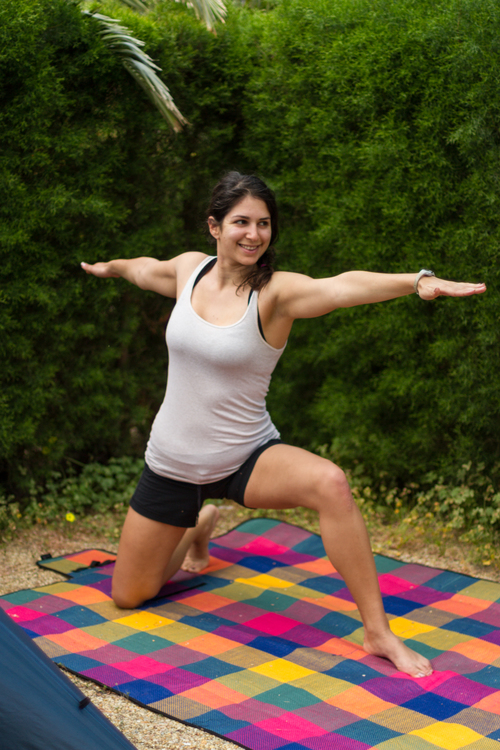
My search was not in vain: I discovered Kayla Kurin, creator of Aroga Yoga. “Aroga,” which I thought was just a great rhyme, actually means “healthy, well, or free from disease.” Ms. Kurin is a yoga teacher based in London who focuses exclusively on chronic pain and illness, as she uses it to manage her own chronic fatigue syndrome.

“I had tried some naturopathic remedies and supplements, but didn’t find any relief from them,” she said. “For many years I was on strong sleep medication that helped me get some semblance of a night’s sleep and get through the day, but I became resistant to all of the medications and eventually stopped those as well.”

Image courtesy of Kayla Kurin.

Image courtesy of Kayla Kurin.

It was around then that she decided to try yoga, as she wandered into a bookstore and saw an instructional DVD for sale.

“This was a huge turning point for me,” she said. “Once I started feeling better from yoga and meditation, I made a lot of dietary and lifestyle changes that helped me heal.”

Ms. Kurin has now been practicing for eight years and teaching for almost two, focusing on vinyasa flow and restorative methods with Yoga London. She relies on her own chronic illness in order to find the most effective poses for others, as even though yoga therapy is beginning to get more popular, there is currently only limited information about it. She has had to combine several schools and theories — mostly vinyasa flow, restorative yoga, and iyengar — to create her own chronic pain/illness program.

It didn’t take long for her to realize that yoga was beneficial, as she left her first session feeling “very relaxed, but also alert. It was a unique feeling and led me to believe that there might be something behind this whole yoga trend.”

Even then, it took about two to three months of regular practice before she could see lasting effects. There were days she was too exhausted to get on the mat, and when asked how she managed to keep a daily practice, she said at first she could only make herself do five minutes. Five minutes would turn into ten, and so on. As she said, “I think that for both yoga and meditation, the longer you practice consistently, the more results you will see.”

She recommends that patients start with a few different types of yoga to see what works best, such as restorative, iyengar, and gentle hatha classes. “For example, some people with CFS swear by hot yoga; others found it was much too intense,” she said.

Even patients who are bed-bound or recovering from severe injuries can find a way to participate in their recovery. Ms. Kurin encourages them to first check with their doctors before even trying deep breathing exercises or a bed yoga program.

Every class is adaptable. In the chronic pain/illness yoga program, the first few classes are entirely sitting or prone positions. They can be done from a bed or chair, the latter of which Ms. Kurin is going to implement into future online courses.

“For example, if a patient is not able to stand or has trouble switching positions, we can work together to make adjustments to the class so it works for them,” she says.

Her online chronic illness class runs for six weeks with hour-long videos and costs about $100. It focuses on breathing exercises and relaxation techniques to lessen pain and stress, improve sleep, and increase energy. Students of any level will find benefits. While each chronic pain/illness series shares the same core lessons, there are enough tweaks that even repeat students will learn something new (as I am sure I will, since I took the previous class and adored it; my only complaints were technical in nature, as the microphone hookup had some reverb in the first two sessions).

While online videos don’t offer the immediate feedback from teachers that a live class does, Ms. Kurin likes this format because nobody has to miss a class because of pain or illness. Everything is at the individual student’s pace.

“If a student is struggling with any of the poses, I can make them a video showing them adjustments for their body,” Ms. Kurin said. She is planning live workshops for later this year, having just taught one on sleep and creativity in Greece; her next idea is a chronic pain workshop in Edinburgh, Scotland. She also wants to offer live classes over Skype, which excites me to no end.

I loved the flexibility of the class, how I didn’t have to push myself through sessions when I felt physically terrible. Instead of feeling like exercise, it felt like a day at the spa for my battered body. Ms. Kurin understands her students on a fundamental level; she knows that there are just some days you can’t do it.

But five minutes a day… We can handle that!

The Takeaway: Aroga Yoga, Yoga for Chronic Illness.

For £65 (or $100.38), you get six one-hour videos of yoga, meditation, and breathing exercises; one-on-one unlimited email support for the duration of the course and three months afterward; and two group chat sessions. The next course begins October 19 and ends November 30, and students have lifetime access to the videos.

I will be taking the course again. I hope to “see” you there!

Bionic Arms for Kids That Are Actually Rad

Whenever I see amazingly rad products for people with disabilities, I have to shout it out. Take a look at these bionic arms made specifically for kids with themes such as “Iron Man,” “Frozen,” and “Star Wars”!!

Now disabled kids get to look like this!

Now disabled kids get to look like this!

Learning About Chronic Pain Prevention With MOOCs

Let’s get this started with a quote from the MOOC in question: “It’s very difficult to completely get rid of chronic pain if you don’t successful manage it in the first thirty days.” — Dr. James Fricton

Well, no wonder I’m f**ked.

I have never successfully completed a MOOC, or massive open online course, but of course this topic struck a chord: Preventing Chronic Pain: A Human Systems Approach, which is being offered through the University of Minnesota. The first week’s lesson was just released, so I am settling myself in for this 10-week course to see how this pain researcher and professor, Dr. James Fricton, can offer me new and unique ways to prevent my pain from getting worse.

Imagine my surprise when I see that the suggested course reading is a mystery novel — that he wrote! As he explains in the introductory video, Dr. Fricton started writing a book because he wanted to explain these preventative concepts as he’d come to learn them; then he realized that there was more of a story to be told, and instead of penning a boring academic treatise on pain management, he’d written an actual novel called The Last Scroll. That was my first indication that this was going to be much more than a barely-present audit of a class. As he said in the syllabus:

To introduce each module, we will use creative strategies that revolve around the story, music, and concepts from a romantic thriller novel entitled The Last Scroll.  In this story, a lonely physician travels to an ancient Roman spa in a small medieval Italian town to learn about universal and timeless truths of health and wellness. You will participate in a virtual visit to the Roman spa to learn about the seven realms within your own life, and how specific actions can enhance positive energy, health, and wellness, while preventing chronic pain.

What.

I want to go to a Roman spa!

Just like this.

Just like this.

Already I sense alternative thinking here. This is so different from other pain management classes or websites that I have encountered, and we’ve barely even started. His resume is hellishly impressive: president of the International MYOPAIN Society, professor emeritus at the University of Minnesota, pain specialist at the Minnesota Head and Neck Pain Clinic, and a senior researcher for the HealthPartners Institute for Education and Research.

So what’s it look like from here on out? Dr. Fricton puts much emphasis on common sense. What can we do to reduce risk factors and enhance protective factors? He said (and I’m paraphrasing here): “Do you have pain from sitting in a chair all day? What do you do in response? You switch the chair, not yourself or your actions.”

That comfy couch will not save you!

That comfy couch will not save you.

Think about how simple that is, how very true. Humanity has created various lifestyles that demand certain levels of physicality; even an office job has a detrimental effect on the body. As my chiropractor said, humans just weren’t meant to sit at a desk for ten hours a day and go typity-typity-type. So, instead of standing while working or even looking for a different job, you’d switch your chair to an ergonomic one. But really, if you sit in a chair for eight hours, it’s going to hurt!

Conclusion: Humanity is stupid.

Population: idiots.

Population: idiots.

Dr. Fricton lightly touched on the topics to come: the seven realms of pain prevention, the different types of chronic pain, and the necessity of common sense in health care. Chronic pain patients have much more authority over their pain than they realize (I am including myself in this statement). Doctors cannot get in our heads. They don’t know what the pain actually feels like. We can make changes in our lives in order to truly prevent chronic pain from worsening. By taking this course, interacting with others in the forums, and being quizzed on the material, I hope to get that Certificate of Completion to stick on my LinkedIn profile.

GIMME THAT GOLD STAR!

GIMME THAT GOLD STAR!

As Dr. Fricton said, “We know our health care system is broken. … It doesn’t do a good job of keeping us healthy.”

We can transform it by first transforming ourselves.

When is a Flare More Than a Flare?

Copy of Copy of ser-en-dip-it-y (n) (8)

I’m writing this while wearing my neck TENS unit that also has electrodes snaking down to my shoulders. I have been in a pain flare for weeks. We are talking days upon days of pure, undiluted flare. I can’t remember the last time I felt this rocky for so long.

Visual representation of how ragtag I feel.

Visual representation of how ragtag I feel.

My absence from this blog has been spent just trying to get through the work day without being crushed by my own body. I broke down and took the heavy medications I save for truly bad days, and they did nothing to relieve the pressure. All three levels of my spine are throbbing with different ailments: tension and shooting pain in my neck, head, and shoulders; pulsing rib pain around my trunk; and rickety bones setting off sciatic jolts in my hips and legs. Is it the heat? The constantly-changing weather? The humidity? Work stress? Sitting for too long? Inhaling while turning too quickly? Who the hell knows.

A violent game of chess caused a flare that lasted for seven weeks.

A violent game of chess caused a flare that lasted for seven months.

What does it mean to flare? A flare is when your normal pain suddenly magnifies for whatever reason. Breakthrough pain occurs when medications fail to cover the pain itself, and the pain “breaks through.” End-of-dose failure is when the pain medications only cover four hours instead of, say, eight. We must plan for these eventualities. We must also decide whether these are new ailments or just our normal underlying problems.

How do you discern that, though? How does one say, “Oh, this back pain is the back pain I’ve lived with for a decade” and be sure that something squirrely isn’t happening as well?

Yeah, I'm looking at you, Trump.

Yeah, I’m looking at you, Trump.

New symptoms become a source of fear. Is it just a headache, or is your fibromyalgia becoming more creative in its illustration? Are your hands just stiff, or is your rheumatoid arthritis getting worse? Is it intense back pain or a kidney infection? We become scientists, turning our microscopic focus inward to splice apart what pain is normal and what pain is not.

The worst part is that flares can last for weeks or even months. What can we do to mitigate these pain flares when they arise?

  • Sleep more.
  • Rest more.
  • Bow out of some activities in order to rest.
  • Protect your body when lifting, moving, walking, etc.
  • Low-impact exercise (swimming, yoga, Tai Chi, etc.).
  • Stretching.
  • Warm baths.
  • Massage.
  • Paraffin wax (I actually own one of these wax units and use it when my hands are particularly bad).
  • Maintain positivity, even when all you want to do is murder everyone.

You can do it, kiddo!

I actually heard the best quote about pain recently that has been resonating with me. That’s appropriate, considering this is Pain Awareness Month. As social psychologist Brock Bastian said,

Pain is a kind of shortcut to mindfulness: it makes us suddenly aware of everything in the environment. It brutally draws us into a virtual sensory awareness of the world, much like meditation.

Pain can become a tool. Instead of it controlling us, we can wield it and use it to find a greater understanding of ourselves. We can discover our absolute limits and push beyond them. We can become more than we ever dared.

That’s why I signed the U.S. Pain Foundation’s pledge. Their mission is “[t]o connect, inform and empower those living with pain while advocating on behalf of the entire pain community. Advocacy is one of the only true ways that we chronic pain patients can help ourselves. I am going to get involved to the best of my ability, because I am more than this pain. I will not let my pain define me. And I will not let this flare get the best of me.

Media Mentions!

I have to say, I’m having a bit of an internal squealing fest over this: My Quell review for the Pain News Network was picked up by Quell’s PR team, and now I’m making my way onto Yahoo! Finance and Benzinga!

[Insert big, stupid grin here.]

Pain News Network: Rating the Pain Creams

Copy of Copy of ser-en-dip-it-y (n) (6)

Here’s my most recent column for the Pain News Network

I am a connoisseur of pain creams. My idea of Christmas is when my friend’s mom mailed me a box filled with unopened packages of Bengay (true story). Every morning I slather on a layer of something containing menthol in order to numb my back. Then my cat decides to attack me. Why? Because cats love menthol (also a true story).

Anyway, I have tried many, many, many different topical anesthetics over the years. Here are my experiences with the common and unique brands:

Bengay: The gold standard. Whenever I use this brand, I generally gravitate toward the pain relief massage gel. However, my friend’s mom sent me the regular Bengay.

What, you thought I was kidding? Here’s a picture of my Bengay drawer.

There’s no doubt about it: Bengay is good. However, even the massage gel only contains 2.5 percent menthol, which is the active ingredient that transports your skin to the Arctic. It also has camphor, like what’s used in Vick’s VapoRub, to reduce pain and swelling.

While Bengay is good, it’s not great. Moving on!

Cryoderm has been my go-to for years, because it is, as they claim, “as cold as ice.” It has 10 percent menthol and also contains arnica and boswellia, the former of which has been used for centuries to control bruises and swelling. The latter is a solid anti-inflammatory agent. Cryoderm also makes a number of heat-producing products, one of which I own. I use it on very cold winter days when the temperature makes me want to crawl back into bed. If I put it on during the rest of the year, I prematurely begin the process of menopause.

Anyway, just because I am a big fan of Cryoderm does not mean I haven’t tried other things, such as…

Emu oil: Last year I was at the Big E (only the greatest annual fair in the northeast, where all food is deep fried, even theKool Aid) when, naturally, I gravitated toward a booth that was hawking pain relief products. They all centered around emus. Yes, that flightless bird from Australia. Apparently its oil can be used for anything, from cracked heels to unsightly patches on your skin. I used it for pain purposes, and I found it to be lacking. Not only was it difficult to apply, but it was ineffective. My search continued.

Arnica cream: This took the inactive ingredient in Cryoderm and went whole-hog by making it the active ingredient — nay, the only ingredient. I think this would do a bang-up job of healing something acute, like bruises immediately following an injury. But for chronic, long-term pain, I was left wanting.

Lidocaine patches are available by prescription only, though there are some almost-as-powerful creams and patches online. I only get 10 at a time because they normally are not covered by my insurance.

These things are fantastic. If I could wrap myself in one like a big numb burrito, I would.

It contains 700 mg of lidocaine, which, based on the word’s suffix, you might recognize as a numbing agent similar to novocaine.

You can slap one on for 12 hours at a time; however, like any other sticky product, it can irritate the skin. These are perfect for very bad days, but what’s the next best thing if you can’t get your insurance to cover them?

Stopain. I have to admit, I was skeptical when my grandmother suggested this. Here is a close transcript our conversation:

“Honey, I saw this thing on TV that works on bad backs. You gotta get it.”

For reference, my grandmother is a Jew from Brooklyn in her upper eighties. She wears tracksuits with heels, always has makeup on, and has the best white Jewfro you could possibly imagine. Since friends and relatives are always suggesting pain relief products (which I do appreciate), I didn’t put much stock in what she said.

“Grandma, you can’t always believe that ‘As Seen on TV’ stuff.'”

I didn’t actually say “stuff.” I said another word that starts with “S.”

“You watch your mouth with me, kiddo. Give it a try. C’mon, do it for me. The commercial said it really worked!”

So I bought it to humor her and let it sit in its packaging for about a week once it arrived. Then, when I ran low on my Cryoderm bottle, I gave it a whirl. I was prepared for it not to work, since the Cryoderm has 10 percent menthol and Stopain only has 8 percent, but… I was incredibly surprised.

I’ve been using it for a few weeks now, and I think it actually works better than the Cryoderm despite having less menthol. What it lacks in that ingredient, it makes up for in boswellia, arnica, eucalyptus oil, peppermint oil, and other things I can’t pronounce. It’s a veritable cornucopia of pain-relieving ointments.

So there you have it. Hopefully my experiences have saved you some time, and if not, at least you will smell delightful to any feline companions.

Do You Want to Get Better?

Copy of Copy of ser-en-dip-it-y (n) (3)

Do you want to get better?

It’s a simple question, but many patients find it almost impossible to answer. It is part of the reason why a great number of doctors are hesitant to prescribe medication that patients need. They don’t want to enable irresponsible behavior. They are worried about what psychiatrists call “secondary gains.”

And what are secondary gains? Well, it’s not fun being a chronic pain patient. All of us know that. But you know what? You deserve to stay home from work. You feel disgusting, like a nuclear wasteland.

I bet Chernobyl is nice this time of year.

I bet Chernobyl is nice this time of year.

Why should you have to go to work? In fact, why should you be required to have a job at all when you feel like death all the time? If anyone deserves disability payments, it’s you. And you know what else? Sometimes you really need an excuse to get out of social obligations. “Oh, sorry, I’m not feeling well. Maybe next time.” Except “next time” turns into ice cream and binge-watching Netflix.

"Harold and I have a very important meeting on the couch. It's going to take a while."

“Yes, Netflix, I AM still watching. Yes, I am aware it’s been twelve hours.”

The worst part is that you might not even realize you’re doing it. So much of pain is mentally derived that you can be sitting in the doctor’s office in actual agony, an eleven out of ten on the pain scale, screaming about how nobody will help you, and subconsciously you might be the one creating the pain. You like how the drugs make you feel — you feel normal! — so you make yourself feel worse in order to get them. You make yourself need them. The mind-body connection is a hell of a thing.

Even worse than that? You might like the attention that chronic pain provides. You become a survivor. A warrior. “Things are so hard for Jen, but my God, she buckles down and charges forward anyway!” You like being the brave one, the eternally-suffering Tiny Tim. It makes you special. It gives you a story. It makes you interesting.

"Yes, I know that my plight is legendarily terrible. Tell me more about how brave I am."

“Yes, I’m feeling a little bit better, but not really. Tell me more about how brave I am.”

I worried for a very long time that I was seeking secondary gains. If doctors can’t figure out why I’m in so much pain, am I really in that much pain? Am I creating an echo chamber in my head? Do I really like suffering? Do I want to get out of get-togethers with friends and family? Do I want a ready-made excuse for any situation?

No.

I don’t want this pain. I want to see my family and friends, to take trips on a whim, and to never go to Stop & Shop Pharmacy ever again. I don’t want to take hundreds upon hundreds of dollars’ worth of medical deductions on my tax return. I don’t want to slather myself in Cryoderm every day. I don’t want to have to work from home instead of having an office job. I don’t want to sleep on a special cervical pillow and hard mattress. I don’t want to go to the chiropractor three times a week. I don’t want to be an advocate for pain patients just because I am one. I don’t want to fear the future. And most of all, I don’t need the story. I want to be interesting for other reasons, not because life dealt me a bad hand in the health department.

I want choices. I don’t want to take advantage of my situation — “Oh, well, I am feeling disgusting today, so I deserve X.” This isn’t to say that I haven’t done that in the past; sometimes it’s just easier to stay home and blame it on my back pain. But I want the choice to stay in or go out. I want the choice to work from home or work in an office. I want the choice of being a person or a patient.

Do I want to get better?

Yes.