Latest Posts

5 Items to Get Through Painful Days

This weekend was very difficult for me. A small party Husband and I hosted on Saturday night celebrating two birthdays and an engagement ended up sputtering to a halt at 10:30 when I kicked my friends out of the house; I was in too much pain to hold a conversation. Super Bowl Sunday was a party Husband went to without me. I stayed home, high on Vicodin and watching the Puppy Bowl (the latter of which is a noble endeavor). My neck and shoulders have been seizing badly. I’ve always thought of it like Silly Putty. If you pull it apart too quickly, it snaps; if you yank it with a tad less force, it pulls apart… just managing to stay connected as it stretches. That’s what my spasms feel like: My muscles are giant wads of pink Silly Putty that spasm and then s-l-o-w-l-y stretch.

So I have to arm myself with whatever I can find that has the ability to help me get through tough times. What are my go-to items?

  1. Cryoderm: I’ve tried a number of topical creams, everything from Bengay to emu oil. I like this one the best because a.) I can alternate between heating and cooling roll-ons, and b.) it’s much less messy than other products.
  2. FLA back brace: designed by women, for women. The thing about other lumbar back braces is that they’re made for men or women who are shaped like 12-year-old boys. I’ve gone through a plethora of back braces, like the Jewett brace, thoracic support, you name it. This one covers both the lumbar and part of the thoracic region, and actually follows the shape of a woman’s curves. You know what that means? It stays where I strap it, and it doesn’t ride up to my rack six times a day!
  3. 10-foot yoga strap: not only can I use this to do some stretches during the day, but I can fashion it into a makeshift thoracic brace to take pressure off my neck. It rolls up and fits into my bag. Thus, I can take it everywhere.
  4. Clarks shoes: I haven’t been able to wear high heels without significant pain for more than a decade. Clarks made a number of super-cute shoes that are supportive and don’t look like drunken Crocs. They don’t make many of this sort anymore, but Clarks produced a certain style of shoe with a sole that I can’t find anywhere else. It feels so much better on my spine than other shoes, even Dr. Scholl’s. Somehow their ergonomic design makes for much less impact when I walk.
  5. Cervical pillow: If I don’t have this with me to sleep on, I don’t sleep. Having my head sink into a donut takes a lot of pressure off my neck. It doesn’t hurt whether I sleep on my back or side, which is dandy since at night I roll around like a beached whale trying to get back into the ocean.
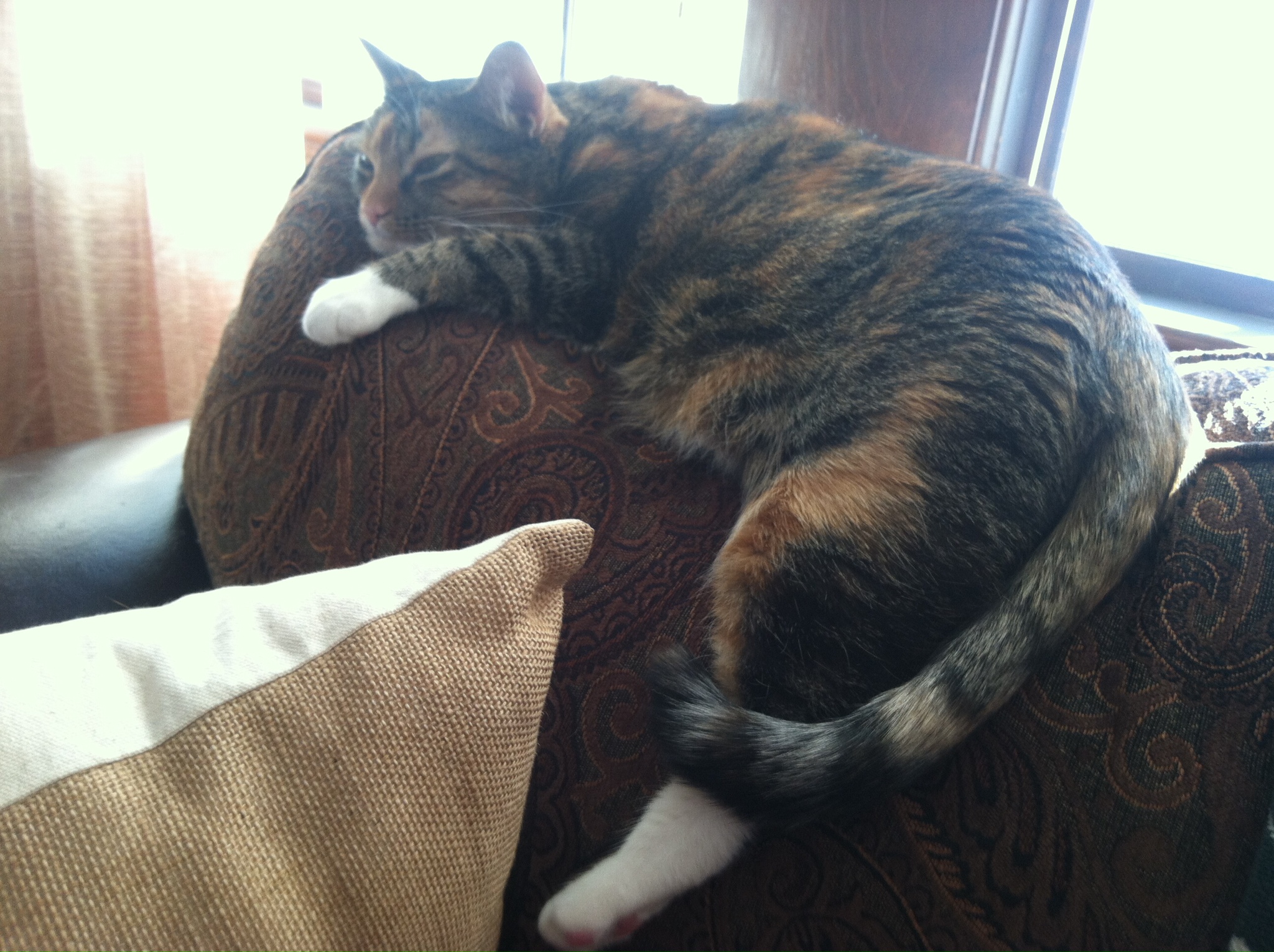
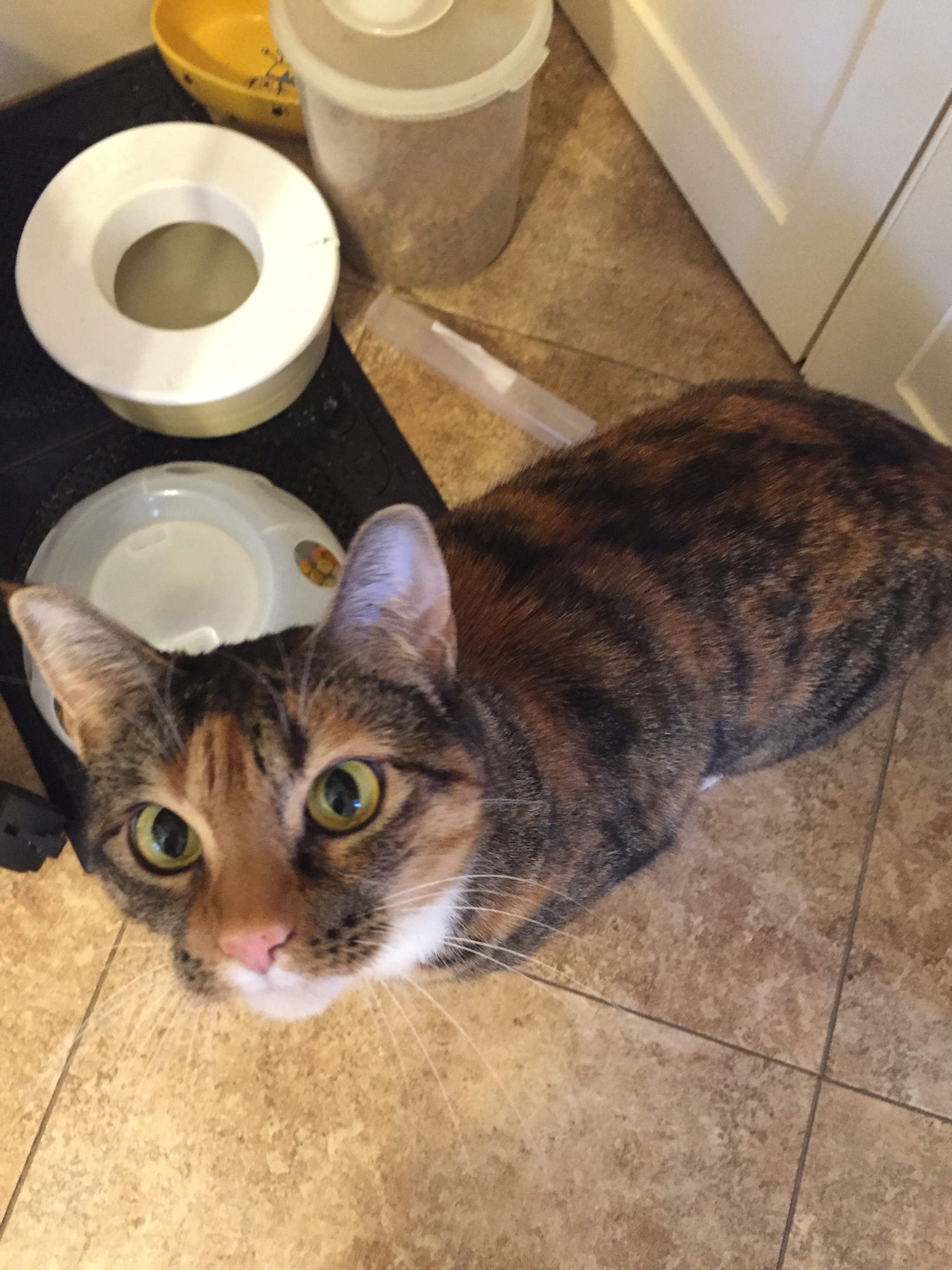
  6. Bonus item: cat. Did you know that purring occurs at a frequency that promotes bone density and healing?

    I guess I'll offer my heating services.

    “I guess I’ll offer my healing services.” — Dr. Fattie.

Bedtime Reflection

So Husband and I were getting ready for bed last night (sorry to disappoint you, but this story is thoroughly unsexy). He watched me shrug out of my clothes like an old woman in a locker room. Craning my head to the right and to the left, I tried to ease the fingers of pressure gripping the back of my skull. I rolled my shoulders, contorted, tried to get away from myself. Husband was silent as I took my evening pills: Lyrica (nerve pain medication), notryptiline (antidepressant used for pain control), Cymbalta (antidepressant used for pain control), tizanidine (muscle relaxer). As I finally got into under the covers, he said, “Sometimes I just don’t get how someone can still be hurting from an accident so many years later.”

That’s the kicker, isn’t it? Those of us with invisible problems, we look fine. Those who know me can see when I’m hurting, but to the vast majority of the human race, I look like a normal person. Even Husband doesn’t realize it sometimes when my spine has exploded and fireworks are bursting inside my skull.

fireworks-1395844-m

At least it’s pretty! (Courtesy photo.)

I sometimes find myself at a loss. If the people who know me best can’t tell when I’m in agony, am I really in agony? Is it really that bad? If a tree falls in the forest and nobody’s there to hear it, blah blah blah. Or — melodramatically speaking — does the pain just isolate me that much? So much that even Husband sometimes can’t understand?

Things just somehow seem worse when you have an audience. Pain is so subjective, anyway. What might be an 8 out of 10 for one person on the “Oh my God this hurts this is the end of the world” scale might be a 2 out of 10 for someone else. That’s why I wonder — what is “all-encompassing pain” for another person? If I could switch bodies with someone on the street “Freaky Friday”-style, would that person be able to handle my freakish limbs, my burning ribcage, what I feel hour upon hour, day after day, for years on end? Would that person be crushed by what I deal with?

Or would he or she shrug it off like it ain’t no thing?

woman-smiling-at-camera-1170492-m

“Oh, this is what you’re always whining about? I’ll just distract myself by running a marathon after hiking Mount Washington after base jumping off the Hoover Dam.” (Courtesy photo.)

Even if structural deformities are rectified, pain can still travel along the nerve pathways it learned during an injury. So that means that sometimes, even if surgery fixes something, the pain would continue regardless. That’s something I’m sure goes over so well with doctors: “So everything is aligned structurally, there’s no reason for me to be in pain, but oh God, I am dying.” It’s no wonder that it’s so hard for chronic pain patients to get the pain medication they (we) need.

Even during a conversation like that with Husband, I can look at him and realize how very lucky I am despite the pain. I have him, and I have Fattie. I have their unyielding support. (I mean, I think I have Fattie’s support. She generally supports anyone who feeds her.)

Fattie has deemed you worthy to gaze upon her glorious visage.

“I will vote for you in exchange for 5,000 Purina pellets.”

While it’s hard when I think that nobody gets how much pain I’m in, I try to remember that I don’t know how much pain anyone else is in, either. My father has back pain from a sports injury years ago, but I never knew it until he told me. Husband’s knees hurt because of bone growths that appeared when he was a teenager. Nobody else has a clue. One of my friends has scoliosis, and it causes her extreme discomfort; I had no idea. The thing is, nobody gets anybody. While that should make me feel lonely, it actually makes me feel sort of better.

How to begin yoga when you have chronic pain

Yoga for pain!! I wish I was near Australia.

rachaelwest's avatarFinding Yoga

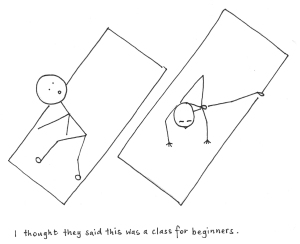
YBeginners yoga class too muchou may have heard that yoga is good for persistent pain. An appropriate class and teacher can certainly help you manage your pain by teaching you to relax, participate in exercise, and increase body awareness.

But many people with chronic pain find that even beginners classes are too much for them.  They say they tend to feel frustrated when they can’t keep up with others in the class.  Here are some guidelines for approaching your first yoga class when you experience chronic pain.

Find a yoga teacher who specialises in pain
There are many styles of yoga and many yoga teachers, each with a unique approach. Find a teacher who understands your condition and offers a gentle, graded approach to learning.  

Book a private class before joining the group
In a group class the teacher may be looking after eight or more students.  If you have special requirements, are particularly challenged with movement, or nervous…

View original post 423 more words

Yukon Ho!

For someone who has broken so many bones, I live in a silly part of the United States.

For those who haven’t been playing the home game, I live near Boston. We kind of had Snowmageddon this week, the first real snow of the season. The weather always seems to run along a wide spectrum in New England, which can physically devastate me.

My chronically-plagued body would do much better in the dry heat of Arizona or New Mexico. That’s partially the reason why I haven’t traveled to that part of the country since becoming perpetually injured; I know deep down that I would never, ever leave. So I live in a frozen tundra in the winter and a humid wetland in the summer. It’s the pressure changes that hurt the most, I think.

Husband and I were mostly housebound during the storm, watching trashy television and eating food just because we could. He even baked a pie. We had a glorious time shoveling the almost-two-foot snow drifts — meaning he was shoveling and I was standing there, watching him shovel. Or I was playing.

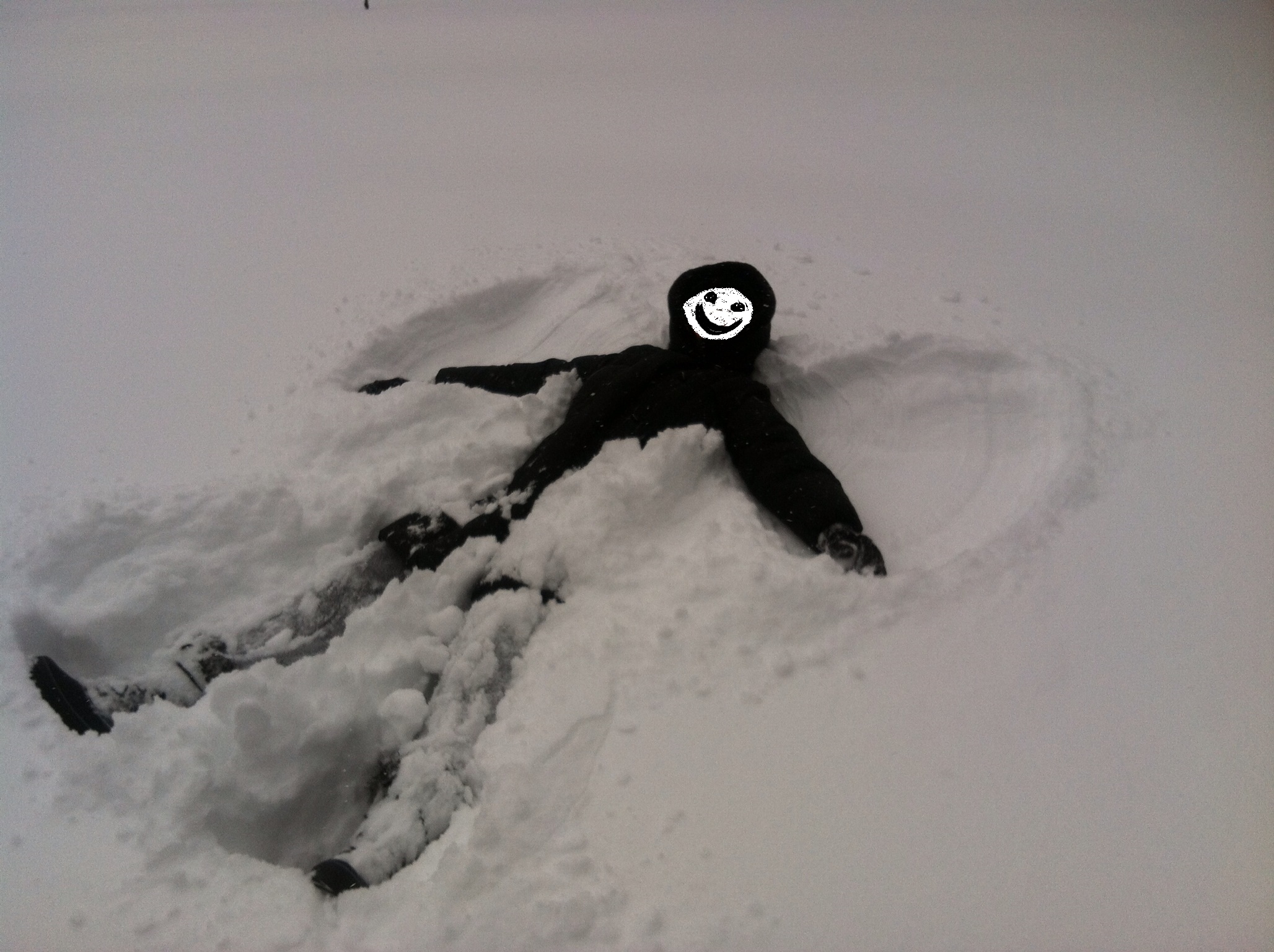
Faceless snow angels!

Faceless snow angels!

While trapped inside, I tried to exercise on the recumbent bike, the only exercise machine that doesn’t decimate me these days; my legs felt like puzzle pieces that only vaguely fit together. I couldn’t move without feeling echoes of earlier exertion. It wasn’t the pleasant burn you get when you’re exercising after a long hiatus. This was deep and angry. I transitioned to gentle yoga. All in all, it was a quiet day.

The greatest moment of Snowpocalypse 2015, however, came when our cat, Fattie, decided to venture outside with us.

Meet Fattie.

Meet Fattie!

To the best of my knowledge, she has never experienced snow. She hated the outdoors when we lived in an apartment, and her previous owner had failed to get her into nature. So that tentative pawstep onto the snow by our front door elated me.

“Come on, Fattie!” Husband had stopped shoveling. This was momentous. When the first flakes had started falling, my plan all along was to throw Fattie out the door to see how she’d react.

She took one step, then two.

Then with no warning, she flung herself off the steps and FWUMPED right into a snowbank.

Only her tail was visible, like a periscope on a submarine. She tried to extricate herself and somehow only dug in deeper, so she stopped moving and started crying.

“MmmmmmmmmmrrrrrroooooOOoOOOOOOOOOOWWWWWWWWWWWW.”

I struggled through the snow drifts to reach her, at which point she actually stopped thrashing and let me scoop her up. She was very still against my puffy coat, as if offended by nature. Husband and I laughed for probably a solid five minutes.

People ask why I stay in the northeast when I hurt as much as I do. It’s for moments like that. If Fattie had gone whole-hog outside in Arizona, she’d probably just land in the dirt and get eaten by a coyote. Massachusetts has the best and worst of every season. I grew up skiing down the mountains, getting snowed into our house, and digging our way out. I walked downtown in the summertime, baking in the humid heat.

The last thing I want to do is fly to always-warmer climates, like an old retiree waiting to check out. Plus, I adore the clothing options that the cold brings; I like to accessorize.

“I’m Sorry” On Repeat: Apologizing for our Chronic Illness and Pain

This is such a huge issue for me. I feel like I’m constantly apologizing and that I’m eventually going to tear apart my marriage. I hate upsetting my husband, even if I know it’s not my fault. This post hits home.

Inflammatory Foods and Chronic Pain

Copy of Copy of Copy of Copy of I Forgot How To Feel Better

I had a very in-depth chat with my nutritionist last night. I’ve been seeing Alexis for more than two years now because of my eosinophilic esophagitis. She specializes in difficult and weird food cases, and she’s been there the entire time as I transitioned back to eating normal food instead of powdered shakes. I’ve continued seeing her both for maintenance and to come to a deeper understanding about the way I view food as both an enemy and a crutch.

Among many other topics of discussion was the idea that America is addicted to sugar. I asked if I should go on a complete sugar detox, mainly because I’m in love with Cinnamon Chex and eat those crunchy, sweet carbs like I have ten rows of teeth. Additionally, at the time of this writing, I finished an entire bag of trail mix that had 15 servings. I mean, I ate some yesterday, but still! Show some self control!

Pictured: pure evil. (Courtesy photo.)

Pictured: pure evil. (Courtesy photo.)

My train of thought was that excess sugar leads to inflammation, and inflammation is something I certainly do not need on top of all my pain. Alexis — her former-hand-model hands fluttering as she let out a disbelieving sound — said, “You Millennials. Why do you deify foods?”

“Who’s who in the what now?” I replied. (I’m taking some liberties here, mainly because I can’t remember the exact wording of our conversation. Ninety-nine percent sure I said that, though.)

“You all deify foods. Look at sugar on a cellular level. C6 H12 O6. Nothing special. But you Millenials, it’s either kale or acai or sugar. It’s always something. ” Frenetic energy built up in her as she leaned forward, clasping her elegant hands together.

“I love kale,” I said. “Kale is delicious.”

“It’s not about the kale. It’s never that simple. And it’s not about the sugar, anyway. It’s about the processing.

“What about when foreigners come to America, taste the bread here, and say it tastes like cake because it’s sweet?” I was still in defense of total detox at that point.

Cake! (Courtesy photo.)

Cake! (Courtesy photo.)

More and more, our conversations have been taking place by video chat; we Skype on the nights when I’m too much pain to make the drive to her office. During this appointment I was physically present. We were sitting in her cute little office in Brookline, me on the L-shaped couch, her on the computer chair. She tends to scoot the chair forward when she gets involved in a flow of thought. “That’s because it’s so processed. It has sugar, sure, but America processes the hell out of its food.”

I was teetering on the edge of the All-or-Nothing bandwagon. “Husband will kill me if I say I have to cut out sugar.” We have a ritual, he and I. In the evenings after work when we’re exhausted, one of us will inevitably say, “I want fat things. Do we have fat things? Let’s make fat things.”

Mmmmmm... fatcakes. (Courtesy photo.)

Mmmmmm… fatcakes. (Courtesy photo.)

Alexis rolled her eyes. “You don’t have to cut out sugar. You don’t have a sugar addiction. Again, it’s not that easy.”

She went on to explain that a total detox was both unnecessary and likely impossible, given my other culinary restrictions. In previous sessions, we’ve talked about anti-inflammatory diets for managing both chronic pain and EE. That’s more in my wheelhouse.

So what is an anti-inflammatory diet, for those of you who didn’t click through the links? Let’s lay them all out here:

  1. Fatty fish (which is a no-go for me, because of the EE)
  2. Whole grains (also a no-go)
  3. Dark, leafy greens (yum)
  4. Nuts (… I just had easily ten servings… sorry, Alexis)
  5. Soy (tofu is like a fluffy cloud that takes on the attributes of the food around it)
  6. Low-fat dairy (off limits for me)
  7. Peppers (yum)
  8. Tomatoes (sort of a yum, it depends on the form of the tomato)
  9. Beets (ew)
  10. Ginger (delicious)
  11. Turmeric (I take this in pill form)
  12. Garlic (offensively delicious)
  13. Onions (sometimes I wish I was the kid in “Holes” who had to live on onions for a few weeks [I know, that’s weird])
  14. Olive oil (a staple in our household)
  15. Berries (perfect snack)
  16. Tart cherries (I drink this in juice form when I’m in pain, and it’s disgusting)

Meanwhile, what causes inflammation? Let’s take them one at a time:

  1. Sugar (sigh)
  2. Saturated fats (can’t eat cheese anyway)
  3. Trans fats (french fries, nooooooo)
  4. Omega 6 fatty acids (like corn oil)
  5. Refined carbohydrates (cake bread!)
  6. MSG (but Chinese food is so good)
  7. Gluten (allergic as hell to this)
  8. Casein (also allergic)
  9. Aspartame (found in more places than you’d imagine)
  10. Alcohol (sigh)

I know that I need to revamp my diet so that I’m not packing on additional pounds and additional pain. Added weight on a weak skeletal frame is not a good idea, and inflammatory foods will worsen my situation.

It’s just… Cinnamon Chex cereal is so delicious.

How to Change Your Approach to a Problematic Life

Copy of Copy of Copy of I Forgot How To Feel Better

One of my main problems is that I’m inherently negative. It’s just my personality. While others will greet things with optimism despite endless disappointments, I veer toward the “cup half empty” philosophy. If I’m negative and end up being hurt by something, at least I expected it. At least I’m not even more disappointed.

I'm actually more like "glass totally empty." Courtesy photo.

I’m actually more like “glass totally empty.” (Courtesy photo.)

I’ve been reading a lot of MindBodyGreen.com lately, and this article piqued my interest. The author, David Zulberg, discusses how to change your attitude when you cannot change your circumstances. This resonated a lot with me. I can’t change my situation; I can’t fix my broken body. I can poke it with needles, fill it with drugs, ice it and heat it and soothe it, but I can’t fix the fundamental problems. I can, however, change my attitude. I can change how I view myself.

Yes: “I’m injured.” No: “I’m crippled.”

Yes: “Today is going to be a great day.” No: “I’m going to hurt all day long.”

Yes: “I’m in pain, and I will continue to live my life.” No: “This pain is an all-encompassing hell on earth. I would rather inhale a cactus.”

Being optimistic can have a great effect on health and well-being. As many publications have shown, having a positive disposition can greatly influence how you feel. Even a fake smile can bring about real feeling, so keeping a positive framework can really help those suffering from chronic pain and illness.

So what does David Zulberg suggest? Here are his five main bullet points:

1. Admit to yourself that you’re not happy.

2. Realize optimism is a choice. 

3. Use positive words.

4. Hang out with friends who have a happy vibe.

5. Say a daily affirmation.

Makes sense. I know that while I understand numbers 1 and 2, I’m not good about number 3 — I constantly want to set things on fire. Husband is happy except when he’s upset about my circumstances. I hang out with him. He makes me happy. My friends, when I feel good enough to see them, also make me happy. I’m good on number 4. I’d say my cat, Fattie, also has a happy vibe.

So number 5. I am going to create a daily affirmation right now. That affirmation is:

I am going to feel good today.

Additionally, I feel good today. 

Tracy Jordan would admonish me for using “good” instead of “well,” but I feel like “good” encompasses more of the emotion I want to foster. (“Superman does good. You doin’ well. You better study your grammar, son.”) I am going to say this affirmation every day, multiple times a day, even if I feel like garbage.

With hair like that, how could he ever feel lousy? (Courtesy photo.)

With hair like that, how could he ever feel lousy? (Courtesy photo.)

I am going to feel good today.

The Bold and the Bionic

Everyone’s talking about the newest thing in pop music, the exquisitely beautiful Viktoria Modesta. She is a below-the-knee amputee who dances with appendages like a lantern prosthetic that attracts a swarm of moths and a black ice pick on which seems to balance the entire world.

“Forget what you know about disability,” the video says to start.

When I watch her, I feel like I can do that.

Disability has a huge mental component — not necessarily how it affects your mind (because it certainly does), but the way it changes how you see yourself and how you interact with the world outside your rebellious, traitorous body. Scientists are currently studying how chronic pain and other seemingly eternal conditions change one’s personality. It makes us less adventurous, more cautious, afraid to move for fear we will further injure ourselves. Every movement cracks the snow globes in which we live.

Viktoria Modesta exploded out of the snow globe and has become this otherworldly symbol for life beyond disability. She chose to remove her leg at the age of 20 after 15 operations failed to improve her condition, which arose from doctors’ negligence at her birth. As she said, “[s]ince the voluntary amputation of my damaged leg I have been able to lead a fully functioning life not just creatively but also physically.” Modesta burst onto the music and modeling scene, and, like the moths swarming to her lantern leg, I have been drawn to her. This statuesque British beauty embraces what others consider her disability and uses it to her advantage.

I have become more cautious. I am less adventurous. The key to my own happiness and peace of mind is to use my disability to my advantage. To work within its strictures and emerge triumphant.

I used to be a writer. When I was a teenager and a college student, I’d spend night after night typing on my laptop. I had a literary agent at the age of 19; nothing has come from that (which certainly isn’t my agent’s fault, because she’s intensely successful). I’d journal each day during class, pretending to be taking notes. Since the second accident — and since becoming a lawyer — I haven’t written at all. I go to work each day, and when I get home I’m either exhausted, in a world of pain, and/or working on projects for other people. I can’t get past the medication fog to the place in my head that has all the stories.

That’s where I will start in order to forget what I know about disability.

You Found Me. Congratulations!

I feel like this is the equivalent of talking to an empty room, but here we go.

My name is Jen. This is me:

Trying to hide your face on the Internet? Please.

Trying to hide your face on the Internet? Please.

Underneath that snood and gargantuan winter coat is a 27-year-old lawyer/writer/editor from the greater Boston area. She is happily married, owns a home, works for a small firm, and has been in two car accidents that severely damaged her spine — one accident in 2004, one in 2013. The second accident was an echo of the first, a lesser impact that somehow produced a bigger sound. I’ve been in chronic pain for a decade. I’ve been to:

  • physical therapists
  • chiropractors
  • surgeons
  • pain management specialists
  • acupuncturists
  • energy healers

I’ve tried:

  • steroid injections
  • cortisone injections
  • Botox injections (in my back)
  • lidocaine injections
  • nerve ablations
  • the full range of narcotics
  • yoga
  • swimming
  • gentle exercise
  • meditation

I finally had a cervical discectomy and fusion in my neck this past year. Now my pain fluctuates day by day, radiating from my spine out to my limbs.

I know that right now the room is empty, but there are so many people out there like me who I want to find. We are part of an aging population, a past in which people were damaged and killed by cars and the people wielding them. Just like how my name saw a surge of popularity during the ’70s and ’80s, one day I will be Mom’s Friend Named Jennifer while all the young children are named Dakota or Aiden or Katniss. Cars are already driving themselves, and someday human error might be relegated to faulty technology during the production process. We would have to find new ways to be injured, new ways to die. Personal injury lawyers might lose a sizable chunk of their clientele. They’d have to settle for slip-and-falls (or “faller downers,” as my friend Grete calls them), product liability, and the occasional cancer class action lawsuit.

I’m okay with that.

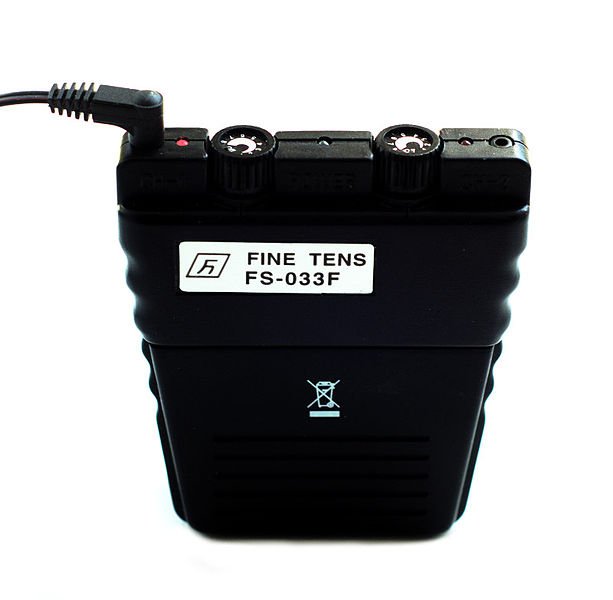
What I’m not okay with is how few resources are out there for people like me, even for simple things — like how to dress without wearing sweat pants and baggy shirts every day. After the second car accident, my doctors suggested both a back brace and the use of a TENS unit to help manage my pain. I managed to slightly electrocute myself on the latter, but that’s a story for another day.
You don't know how hard it was to find a picture of a TENS unit without an anal probe attached to it.

You don’t know how hard it was to find a picture of a TENS unit without an anal probe attached to it.

Anyway… I have this TENS unit, which (as many adventurous people have discovered) can also be used for erotic purposes. I use it in the traditional sense.

TENS stands for (Transcutaneous Electrical Nerve Stimulation), which are predominately used for nerve related pain conditions (acute and chronic conditions). TENS machines work by sending stimulating pulses across the surface of the skin and along the nerve strands. –Tensunits.com

Doesn’t that sound nice? It’s a little generator that you strap onto your belt like a dad from the ’90s wearing a clip-on cell phone. The lead wires snake under your clothes, and you place the electrodes wherever there is pain. Simple enough.

Except everyone can see that you’re wearing a TENS unit.

I was pretty miserable. On top of having an enormous amount of pain, I was uncomfortable with how I looked. There is no smaller version and no graceful way to wear it as prescribed. I tried Googling an answer to see how other people had dealt with it. Surprisingly, I couldn’t find much at all regarding the TENS. One woman said she hadn’t worn dresses in 27 years because she couldn’t find a way to wear both the device and a dress. This was unacceptable to me. I like dresses. I wasn’t going to wear pajamas or medical clothes just to accommodate this piece of electrified plastic.

Eventually I found this master of disguise: ShootingTulips, AKA Ruthanna Kuhn, on Etsy.

I don’t know Ruthanna, but I wish I did. I was searching for any possible way to wear both a TENS unit and my normal clothes when I found her online shop. She sells lace gun holsters. Gun holstersMade of lace. How fantastic is that? And guess what else they hold? Insulin pumps. People have gotten very creative with hiding insulin pumps — pockets sewn into bras, satchels attached to underwear, secret pockets inside of pants. I love human ingenuity.

An insulin pump is roughly the same size as a TENS unit. Trying not to get my hopes up, I ordered one… and it was magical. The TENS fit perfectly into the stretchy pocket, and the garter stayed up on my thigh without sliding down. As long as I wore flared dresses and skirts, it was undetectable.

When I’m having a terrible day physically, it helps when I’m dressed the way I want to be dressed. Looking good helps me feel good. Nobody wants to face the world wearing sweatpants.

Actually, that’s a lie. I love sweatpants. Just not while I’m being a lawyer (though that would be lovely).

Things like that, like the lace TENS unit holster, are why I started this blog. On the one hand, it’s for me to work through the considerable rage and depression I have regarding these accidents and how they have irrevocably changed me. On the other hand, it’s to provide a resource that hopefully will grow as more people connect to it. It’s for those of us navigating doctors’ offices and insurance companies. Like one of my professors at Ohio University said about chronic pain, it’s for those of us “wandering the starlit fields.”

Instead of just managing pain, I want to find a way back to myself. I want to tease apart what drives me forward, what pulls me back, and what I can do to live a fuller life even though I have this constant pain in my body. I want to become more than my limitations.

So now I say to this empty room: Hi. There will be more people here soon. There are so many of us, and we always find one another.